 X
X
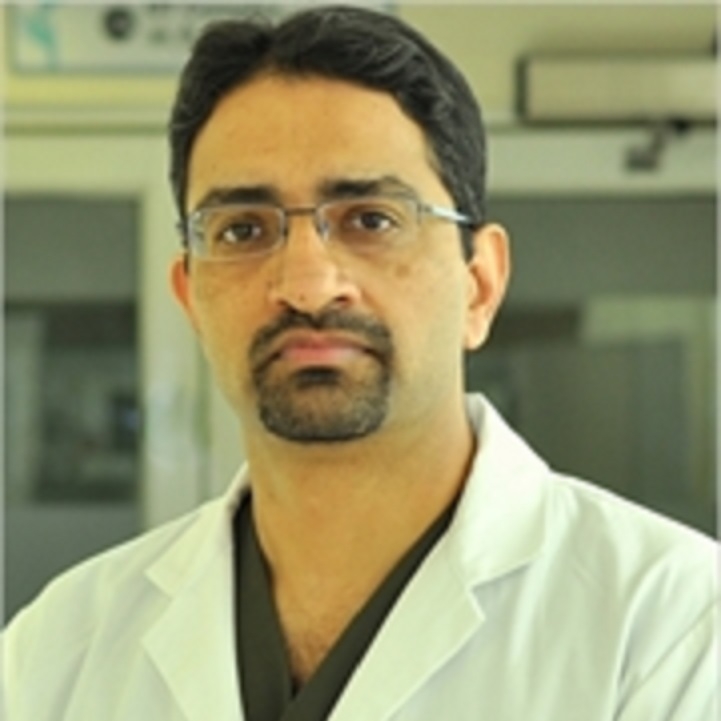
DR SUBHASH JANGID
Orthopedist
Introduction
Dr. Subhash Jangid is presently working as Senior Consultant, Joint Replacement, and Orthopaedics at Artemis Hospital, Gurgaon & Med harbour Family Clinic. Dr. Subhash Jangid's primary work involves knee and hip joint replacement. Dr. Subhash Jangid has a vast experience of more than 16 years in the field of Orthopaedics. Dr. Subhash Jangid is now a known faculty in the field of Arthroplasty in India. Dr. Subhash Jangid is been invited as guest faculty in most of the arthroplasty conferences in India. Dr. Subhash Jangid is the only one in India who uses NAV 3 computer navigation for joint replacement surgery. The NAV 3 is World's most advanced Computer Navigation system for Joint Replacement surgeries. This technique gives better results to the patients and the recovery is faster as compared to the conventional technique. Besides this, the life of the artificial joint increases to 20 – 25 years with this technique.
Hospital Associations
Artemis Hospital.
Services/Interest
- Orthopedist
- Joint Replacement Surgeon
- Orthopedist
- Traumatology Specialist.
Experience
Dr. Subhash Jangid is one of the best Orthopedists with 12 years of experience.
Professional Memberships
Indian Orthopaedic Association. Indian Society for Hip and Knee Surgeons. Indian Arthroscopy Society. Delhi Orthopedic Association. Member of Royal College of Physicians and Surgeons, Glasgow, UK.
Awards and Recognitions
Progressive massive osteolysis of humerus. Subhash Jangid, R. Mittal, Vijay Sharma, A.K. Das. J Shoulder Elbow Surg. 2006 Freeman — Sheldon Syndrome. Subhash Jangid, S.A. Khan. Indian Paediatrics, 717, 2005 Post traumatic elbow stiffness. S. Rastogi, Subhash Jangid. Proceedings of the Fifth Post-Graduate Instructional Course, North Zone, pg. 22-26, 2003. Neglected Dislocation of the Elbow.......Who Cares? S.A. Khan, Subhash Jangid. Orthopaedics Today, Vol. V No. 4, Oct — Dec; pg. 204206, 2003. Elbow Stiffness : Magnitude of problem. S. Rastogi, Subhash Jangid. Published in CME ofIndian Orthopaedic Association, 2003.
Education
MBBS - Sardar Patel Medical College, Bikaner, 1999. MS - Orthopaedics - All India Institute of Medical Sciences, New Delhi, 2006. DNB - Orthopedics/Orthopedic Surgery - National Board of Examination, India, 2004.
I Speak
English, Hindi
Feedback For Dr Subhash Jangid
Write FeedbackWhat is an orthopedic doctor?
An orthopedic doctor, also known as an orthopedist, is a doctor of osteopathy (DO) or Doctor of Medicine (MD) who specializes in the musculoskeletal system that comprises of bones, joints, ligaments, tendons, muscles, and nerves. Many orthopedists specialize in certain areas of the body, such as hand and wrist, foot and ankle, back, or neck and spine. Additionally, orthopedic doctors may focus on a specific field of orthopedics, like sports medicine, pediatrics, and trauma.
What is an orthopedic surgeon?
An orthopedic surgeon is specialized in the musculoskeletal system and is a doctor who corrects congenital or functional abnormalities of the bones with surgery, bracing, and casting.
Board-certified orthopedic surgeons have successfully completed a minimum of thirteen years of formal education. They must finish four years of study in a college or university and get an undergraduate degree. The undergraduate degree must be followed by the four years of study in a school of medicine. After which, they should complete five years of Orthopedic Residency at a major medical institution. They can later choose to become a fellowship-trained orthopedic surgeon by completing one year of specialized education in an accredited fellowship program.
When should I see an orthopedic?
- If you’re experiencing pain in your muscles, joints, you may wonder whether to see a doctor. If you have any of the following symptoms, it is recommended you make an appointment with your physician to be evaluated.
- It is difficult for you to perform daily activities because of pain, stiffness or discomfort.
- You are experiencing chronic pain which is a pain that lasts longer than 12 weeks.
- You’re noticing some amount of decreases in your range of motion
- You feel unstable while standing or walking
- You have had a soft tissue injury which is not improving after 48 hours.
- As there are a number of medical specialties that treat musculoskeletal conditions, such as arthritis, chronic pain, and injury, you may wonder which type of specialist will best be able to diagnose and treat you. Orthopedic doctors and surgeons, neurologists, rheumatologists, rehabilitation medicine doctors, and physical therapists all treat some conditions that relate to the bones, joints, and muscles.
What are orthopedic injuries?
Orthopedic injuries include any injury to the musculoskeletal system. Often, these injuries relating to the bones and joints are a result of an accident or trauma to the body. Muscles and joint pain, bone pain that started after an injury or accident, a torn or ruptured tendon, instability or dislocation, a progressing hip or knee pain, arthritis in your hip, knee, or elbow, neck or back pain, radiating arm or leg pain, joint pain in many joints across your body.
What are the tests performed by orthopedics?
- X-Ray (radiographs) is the test that uses electromagnetic radiation to see inside the body and check for injuries like fractures and cancer tumors.
- Magnetic Resonance Imaging (MRI) uses powerful magnets and radio waves to create pictures of what’s happening inside a person's body.
- Arthroscopy is a surgical procedure used by orthopedics to see inside a joint. It is performed by using small instruments and a tiny camera which is inserted through a small incision.
- (CT or CAT scan) Computed Tomography Scans are the tests that combine X-rays with computer technology to produce detailed images of your body.
- Blood tests used by orthopedics to pinpoint conditions like rheumatoid arthritis, cancer, and other conditions that may be identified by the presence or absence of a specific substance.
- Bone scans measure how much bone tissue is removed and replaced in your body. Tests like bone density scan fall under this category of tests.
- Gait analysis is a test that uses a person's gait to identify abnormalities in the structure, limb alignment, and joint rotation.
- Reflex response is used by a physician to asses how quickly your joints and brain respond to stimulus.
What are the diseases treated by orthopedics?
- Arthritis
- Osteoarthritis
- Rheumatoid Arthritis
- Treatment for Arthritis
- Bursitis
- Elbow Pain and Problems
- Cubital Tunnel Syndrome
- Lateral Epicondylitis (Tennis Elbow)
- Medial Epicondylitis (Golfer's or Baseball Elbow)
- Fibromyalgia
- Foot Pain and Problems
- Fractures
- Hip Fracture
- Low Back Pain
- Hand Pain and Problems
- Carpal Tunnel Syndrome
- Knee Pain and Problems
- Ligament Injuries to the Knee
- Torn Meniscus
- Kyphosis
- Neck Pain and Problems
- Osteoporosis
- Paget's Disease of the Bone
- Scoliosis
- Shoulder Pain and Problems
- Soft-Tissue Injuries.